
 By Admin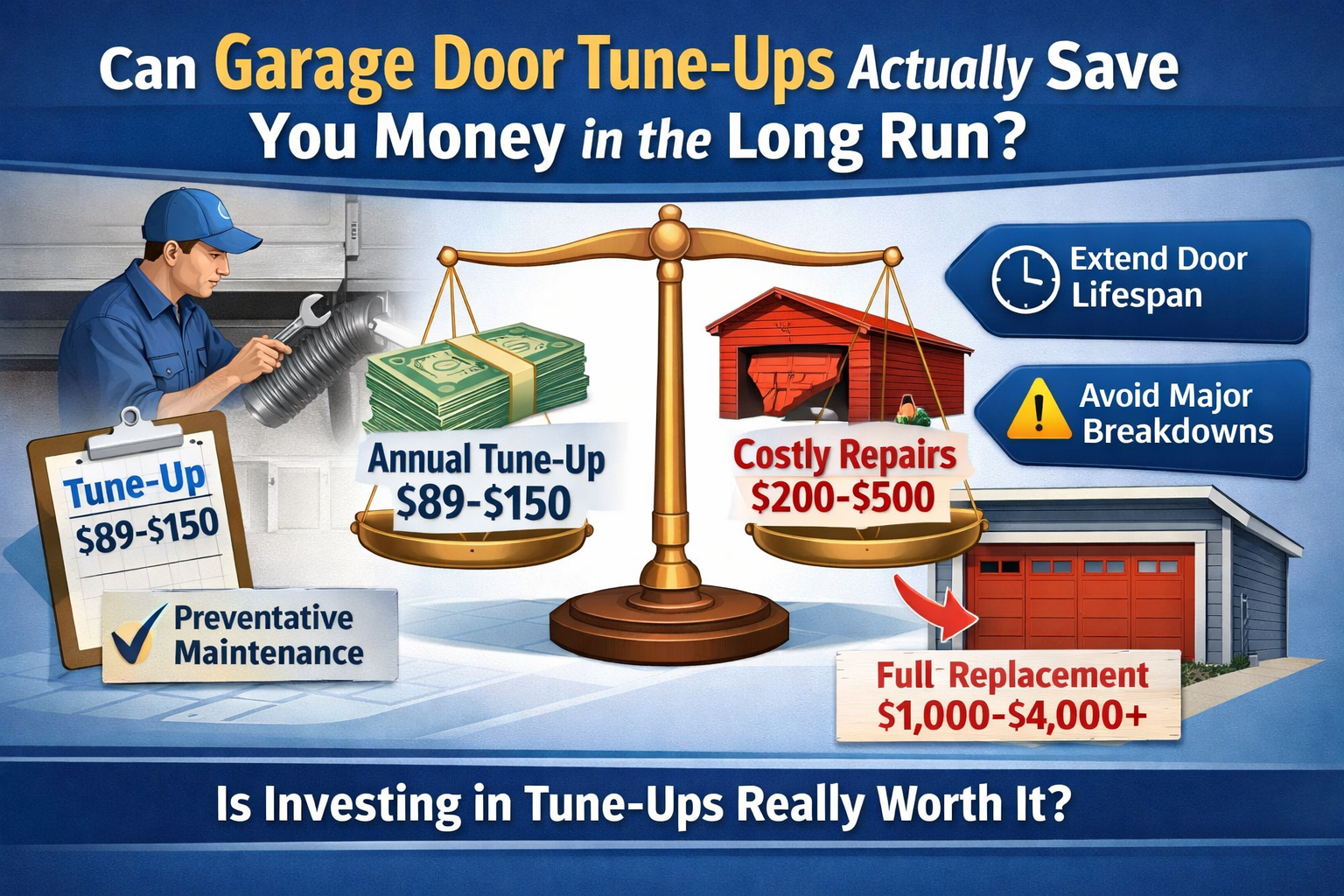
Garage door tune-ups cost $89-$150 typically. Emergency repairs average $200-$500. Complete door replacement runs $1,000-$4,000 or more. The math seems straightforward—spending $100 annually on maintenance should prevent more expensive problems. But does it actually work that way? The answer depends on your door’s age, usage frequency, and whether you’re comparing maintenance to inevitable wear versus optional upgrades. Professional garage door service by Select Garage Doors includes tune-ups designed to catch small problems before they become expensive failures, though maintenance cannot prevent every issue or extend an old system indefinitely.
Standard Tune-Up Components
Professional service includes lubrication of all moving parts (hinges, rollers, springs, tracks), which reduces friction and prevents premature wear. Technicians tighten hardware that vibrates loose from daily use, adjust spring tension to ensure proper door balance, test safety features (auto-reverse and photoelectric sensors), inspect for worn components, check track alignment, and adjust opener force settings.
Cost Comparison Reality
Annual tune-up: $89-$150
Common repairs without maintenance: Spring replacement ($150-$350), roller replacement ($100-$200), cable replacement ($150-$300), opener repair ($150-$400), track realignment ($125-$250).
Major failures: Opener replacement ($300-$500), complete door replacement ($1,000-$4,000+).
A single spring failure costs more than a year of tune-ups. However, springs eventually need replacement regardless of maintenance—tune-ups extend their life but do not prevent eventual failure.
When Maintenance Provides Value
Newer Systems (Under 10 Years)
Regular maintenance on newer garage doors and openers prevents premature failure. A door that might last 15 years without maintenance could last 25-30 years with proper care. Avoiding one premature opener replacement ($400) over 15 years pays for 3-4 years of annual tune-ups.
High-Use Doors
Doors opened 8-10+ times daily experience more wear than those used twice daily. Frequent use justifies more maintenance—potentially twice yearly. More use creates more opportunities for small problems to develop into failures. Catching these early prevents inconvenient breakdowns and expensive emergency calls.
Attached Garages in Extreme Climates
Temperature extremes stress components. Weatherstripping and seals deteriorate faster, affecting energy efficiency. Properly maintained doors in attached garages reduce heating and cooling costs by preventing air leakage.
When Tune-Ups Have Limited Value
Very Old Systems (15+ Years)
A 15-year-old opener approaching typical lifespan will not last significantly longer with maintenance. Spending $150 on tune-ups for a system likely to fail within 1-2 years regardless makes little financial sense. Save that money toward replacement.
Doors Showing Major Wear
If springs are rusting heavily, cables are fraying significantly, or the door is severely unbalanced, tune-ups will not fix these problems—they need repairs. Tune-ups differ from needed repairs.
Low-Use Situations
A door opened once or twice daily in mild climate experiences minimal wear. Annual professional tune-ups may be excessive—every 2-3 years might suffice, with homeowner checks in between.
Homeowner Maintenance Between Professional Service
Every 1-2 Months: Visual inspection for worn rollers, frayed cables, loose hardware. Test auto-reverse with object in door’s path. Check photoelectric sensors. Listen for unusual noises.
Every 3-4 Months: Tighten loose hardware, clean track debris, wipe weatherstripping, check door balance (disconnect opener, lift door halfway—should stay in place).
Every 6 Months: Lubricate hinges, rollers, springs, and tracks with garage door lubricant (not WD-40).
These simple tasks extend time between professional services for low-use doors.
Calculating Personal ROI
Consider door age (newer systems benefit more from maintenance), usage frequency (more use increases maintenance value), climate (extremes increase maintenance importance), garage type (attached garages affecting home energy increase maintenance value), and local emergency service costs (higher costs increase prevention value).
For most people with doors under 12 years old on attached garages with moderate to high use, annual tune-ups pay for themselves by preventing one major repair every 3-5 years and extending overall system life.
The Financial Reality
Tune-ups save money primarily by extending component lifespan and catching problems early. They work best on newer to middle-aged systems with regular use. They have diminishing returns on very old systems approaching replacement or rarely-used doors in mild climates.
Match service frequency to actual needs rather than following universal rules. Understand that even with perfect maintenance, components eventually wear out—tune-ups delay this but do not prevent it indefinitely.
For typical homeowners with standard garage doors under 12 years old, annual tune-ups represent sound financial planning. The $89-$150 annual cost prevents problems that would cost 2-3 times more to repair and extends the overall system life by years. However, for very old systems or rarely-used doors, the calculation shifts—sometimes accepting eventual failure and saving for replacement makes more financial sense than continued maintenance investment.