 By Admin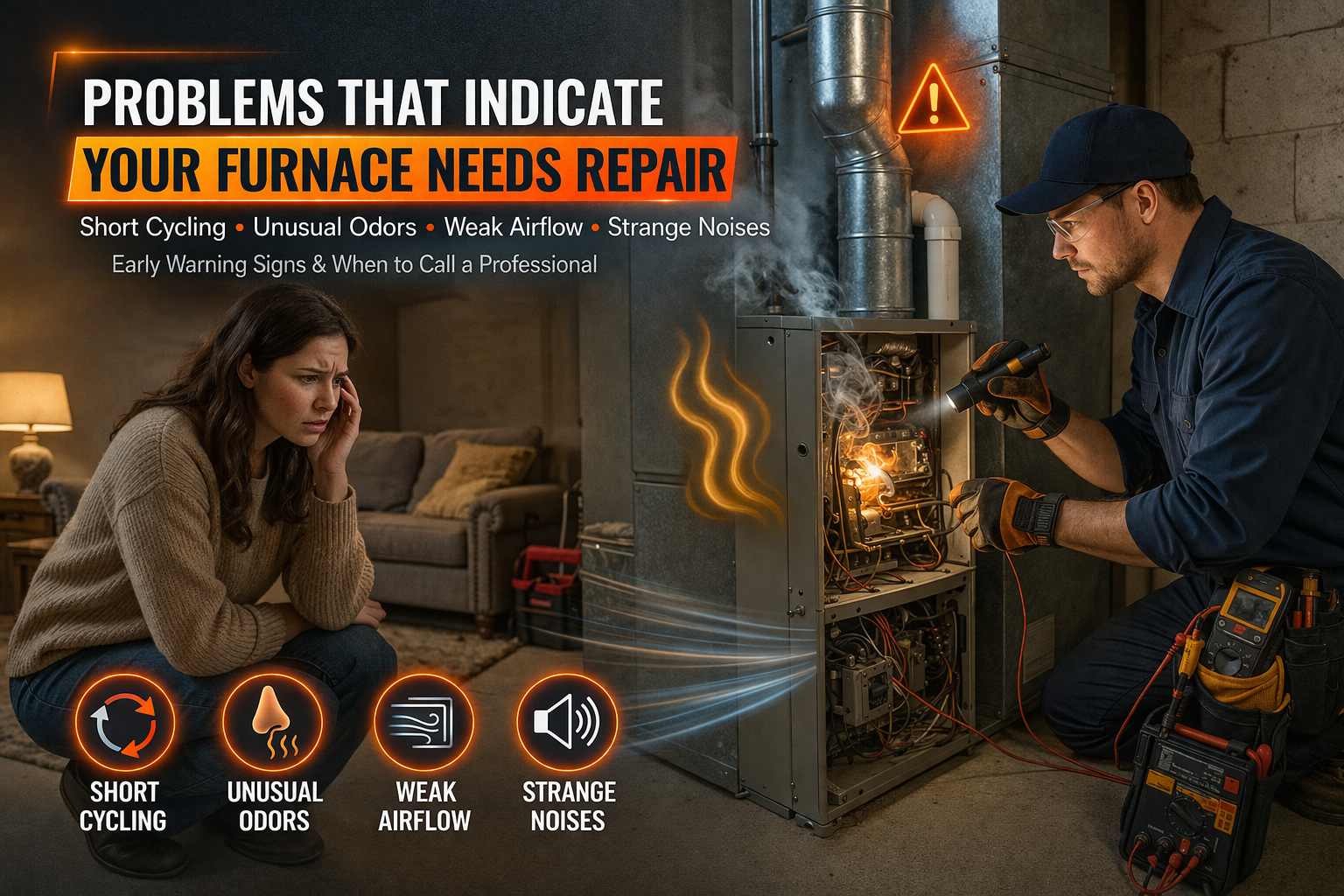
Understanding various furnace problems enables you to identify abnormal system behaviors early and schedule repairs before they escalate into major mechanical issues. Timely furnace repair can preserve the unit’s efficiency and protect it from unnecessary strain. Enhanced efficiency and reduced component strain support a longer service life for the unit. Here are a few problems that indicate your furnace needs to be repaired:
Short Cycling
Frequent short cycling, where a furnace repeatedly turns on and off instead of running steadily, prevents consistent indoor temperatures. A furnace that repeatedly stops and restarts puts strain on components such as the heat exchanger, igniter, and blower motor. Contacting a furnace repair professional immediately can protect these components from wear and prevent potential mechanical failure. Professional repair of a furnace that short-cycles also helps protect the heat exchanger from cracking; this prevents dangerous carbon monoxide leaks in your home.
A short-cycling furnace consumes more electricity than one that runs steadily, so prompt repairs help prevent spikes in energy use. Expert repairs restore a furnace’s ability to produce heat consistently and evenly. This prevents temperature fluctuations that create uncomfortable hot or cold zones in your house. A repair expert can troubleshoot the thermostat to make sure it’s installed or calibrated correctly. An improperly calibrated or installed thermostat is more likely to send incorrect signals, causing the furnace to shut off prematurely.
Clogged air filters can also cause a furnace to short-cycle. A technician unclogs the filters to restore proper airflow; this prevents overheating and early system shutdowns. If the furnace is undersized or oversized for your home, technicians recommend the right unit size to heat the space adequately without running for long periods. Repair specialists also replace cracked heat exchangers when correcting short-cycling. A cracked heat exchanger disrupts normal flame distribution and triggers abnormal pressure changes, causing the furnace to shut down early.
Unusual Odors
A damaged furnace may emit musty, burning, or chemical odors that persist beyond initial startup. Burning or electrical smells from your furnace often signal that internal wiring or components like capacitors are overheating and possibly producing sparks. Dirty filters and clogged drain lines in your unit trap excess moisture; this encourages mold or mildew growth and produces musty odors. Rotten-egg or sulfur-like odors often indicate a gas leak likely caused by a faulty connection or a cracked valve.
Poor combustion, a cracked heat exchanger leaking carbon monoxide, or even overheated metal components may cause your furnace to emit metallic or chemical smells. Immediate furnace repairs help protect your home and family from gas leaks, which can cause explosions and carbon monoxide poisoning. A repair expert cleans drain lines and filters in furnaces that emit musty smells, and this helps enhance your home’s indoor air quality.
Weak or Reduced Airflow
Air filters clogged with debris, dust, or pet dander often block the furnace’s main air intake. This forces the blower to work harder to pull air through the clogged filter, resulting in weaker airflow. Grime on the blower motor or a bent fan blade also reduces the amount of heated air your furnace delivers. Scheduling immediate repairs can help protect your furnace from overheating; this prevents possible heat exchanger damage. Expert repair also helps restore a furnace’s normal combustion process, enhancing its efficiency and preventing potential breakdowns.
Unusual Noises
Underlying mechanical issues, such as loose blower parts, screws, or panels, typically cause furnaces to produce rattling sounds. Clogged air filters restrict a furnace’s airflow, and this produces whistling noises during operation. A heating system with a cracked heat exchanger may produce persistent popping or rumbling noises.
Corroded or dirty furnace burners cause delayed ignition. As gas builds up in the combustion chamber and explodes upon ignition, a booming or banging sound occurs. A repair technician cleans a furnace burner, helping prevent delayed ignition and possible gas leaks or explosions. Repairs can also involve replacing faulty parts like the ignitor and heat exchanger, and fastening loose internal components. This helps your furnace run consistently without straining internal components or producing unusual noises.
Schedule Furnace Repair Services
Issues like short cycling or inconsistent heating require immediate expert attention to restore your furnace’s efficiency and prevent a total breakdown. A functional furnace keeps your home comfortably warm with steady airflow and without unusual noises or odors. Contact a professional furnace repair team to schedule service today.