
 By Admin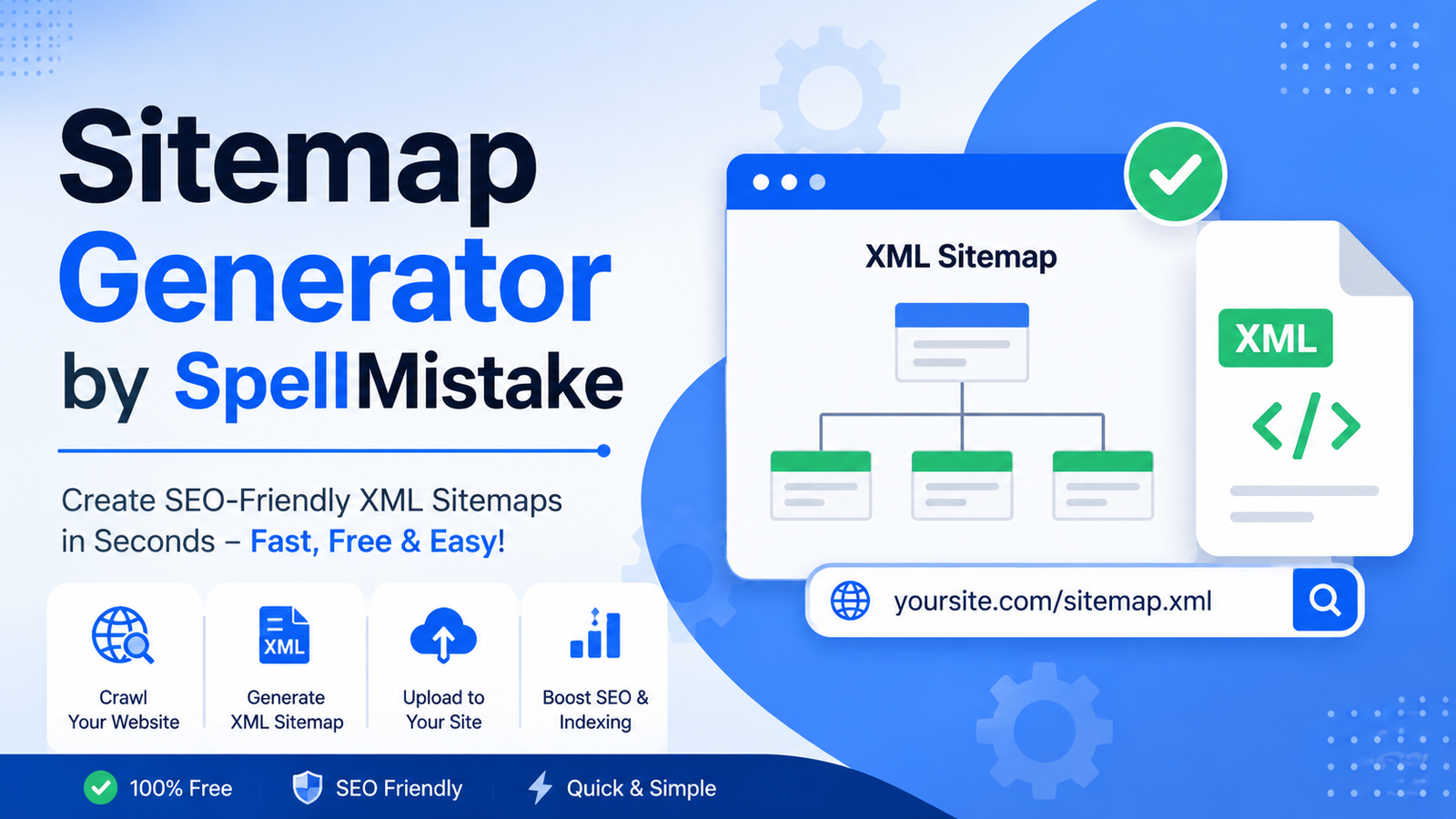
If you’ve ever wondered why some websites seem to get indexed by Google faster than others, there’s a good chance their sitemap is doing part of the work. It isn’t magic… just good website organization.
That’s where the Sitemap Generator by SpellMistake comes in.
It’s a free online tool designed to help website owners create XML sitemaps without dealing with technical code or complicated SEO software. Whether you run a personal blog, an online store, or a business website, having a sitemap can make it easier for search engines to discover your pages and understand your site’s structure. Google also recommends using sitemaps, especially for larger websites or sites with frequently updated content.
Let’s look at what this tool does and why so many beginners find it useful.
What Is Sitemap Generator by SpellMistake?
Sitemap Generator by SpellMistake is a browser-based SEO tool that scans your website and automatically generates an XML sitemap. The sitemap lists your important URLs in a format that search engines like Google and Bing can easily read.
Instead of manually creating XML files—which honestly isn’t much fun—you simply enter your website address, let the tool crawl your pages, and download the generated sitemap.
It saves time. And it reduces the chance of making formatting mistakes.
Why XML Sitemaps Matter
An XML sitemap works like a roadmap for search engine crawlers.
It tells them:
- Which pages exist on your website
- Which URLs are important
- When pages were last updated
- How your content is organized
Although Google can often discover pages through internal links, a sitemap helps ensure important pages aren’t overlooked, particularly on large or newly launched websites.
Benefits of Having a Sitemap
- Faster page discovery
- Better indexing of new content
- Improved crawl efficiency
- Helpful for websites with hundreds of pages
- Makes website maintenance easier
- Supports overall SEO strategy
A sitemap doesn’t guarantee higher rankings… but it definitely helps search engines understand your site better. That’s an important distinction.
Key Features of Sitemap Generator by SpellMistake
One reason many people like this tool is its simplicity.
Here’s what it offers:
| Feature | Benefit |
|---|---|
| Free to use | No subscription required |
| Browser-based | No software installation |
| Automatic crawling | Detects website URLs automatically |
| XML sitemap creation | Generates search-engine-friendly files |
| Beginner-friendly interface | Easy for non-technical users |
| Supports multiple website types | Works with blogs, stores, portfolios, and business sites |
According to available documentation, the tool focuses on producing standard XML sitemaps that comply with common search engine guidelines. It aims to simplify the process without requiring plugins or coding knowledge.
How to Use Sitemap Generator by SpellMistake
The process is surprisingly straightforward.
Step 1
Visit the Sitemap Generator tool on SpellMistake.
Step 2
Enter your complete website URL.
Example:
https://yourwebsite.com
Step 3
Start the scan.
The tool begins crawling your website and collects accessible URLs.
Step 4
Generate your XML sitemap.
Within a short time, you’ll receive a downloadable sitemap file.
Step 5
Upload the file to your website’s root directory.
Usually:
https://yourwebsite.com/sitemap.xml
Step 6
Submit your sitemap to Google Search Console.
That lets Google know where your sitemap is located so it can process it more efficiently.
Simple enough.
Who Should Use This Tool?
The Sitemap Generator by SpellMistake isn’t only for SEO professionals.
It’s useful for:
- Bloggers publishing regular content
- Small business owners
- Freelance web designers
- E-commerce stores
- Affiliate marketers
- Portfolio websites
- News websites
- Educational websites
Even if your website isn’t huge today, building good SEO habits early can save time later.
Best Practices After Generating Your Sitemap
Creating the sitemap is only part of the job.
You’ll also want to:
- Update the sitemap whenever major pages are added
- Remove deleted URLs
- Avoid including duplicate pages
- Keep internal links working properly
- Submit updated sitemaps after significant site changes
- Check Google Search Console for sitemap errors
And yes… it helps to review things occasionally instead of forgetting about them for months.
Common Mistakes to Avoid
Many website owners accidentally create sitemap issues without realizing it.
Some examples include:
- Including broken URLs
- Listing pages blocked by robots.txt
- Adding “noindex” pages
- Forgetting HTTPS versions
- Leaving outdated URLs inside the sitemap
- Never updating the sitemap after publishing new content
These mistakes won’t necessarily destroy your SEO overnight, but they can slow down crawling and indexing.
Sitemap Generator by SpellMistake vs Manual Sitemap Creation
| Manual Method | SpellMistake Tool |
| Requires XML knowledge | No coding needed |
| Time-consuming | Quick generation |
| Higher chance of errors | Automated formatting |
| Manual updates | Easier regeneration |
| Better for developers | Great for beginners |
Unless you enjoy editing XML files by hand—and honestly, most people don’t—the automated option is usually the easier route.
Does a Sitemap Improve SEO?
This question comes up a lot.
The short answer is… indirectly.
A sitemap doesn’t automatically boost rankings.
Instead, it helps search engines:
- Discover content faster
- Crawl websites more efficiently
- Understand website structure
- Find newly published pages
Better indexing creates a stronger foundation for SEO, but rankings still depend on quality content, backlinks, page speed, user experience, and many other factors.
Think of a sitemap as making your website easier to navigate for search engines. It’s not the whole SEO strategy, but it’s definitely one important piece.
Final Thoughts
The Sitemap Generator by SpellMistake offers a practical solution for anyone who wants to generate XML sitemaps without technical headaches. It keeps the process simple, works directly from a web browser, and helps website owners prepare their sites for better search engine crawling.
While no sitemap tool can guarantee higher rankings, maintaining an accurate and updated XML sitemap is considered a fundamental SEO practice. Combined with quality content, solid internal linking, and regular website maintenance, it can contribute to better indexing and improved visibility over time.
If you’re building a website—or managing one already—creating a sitemap is one of those small tasks that can make a meaningful difference. Sometimes the simplest SEO improvements are the ones people overlook.