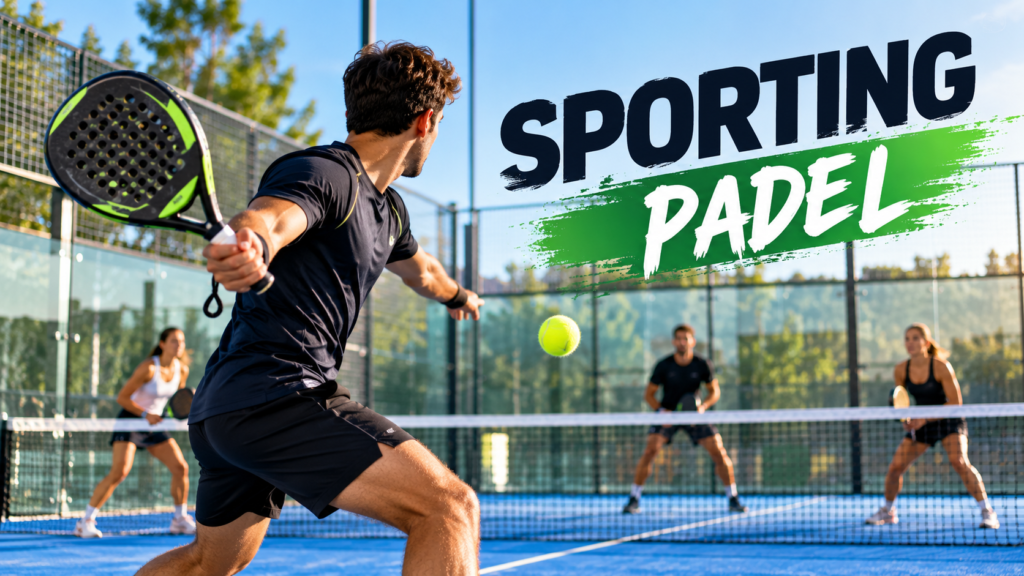
Sporting padel is an exciting way to enjoy an active lifestyle, meet new people, and develop your racket skills. If you have seen players hitting a ball around a glass court and wondered what makes this sport different, you’re not alone. Padel has become increasingly popular because it combines familiar elements of tennis with the fun of wall rebounds and team play.
And the best part? You don’t need to be a professional athlete to get started. With some practice, beginners can learn the basics and enjoy competitive rallies surprisingly quickly.
What Is Sporting Padel?
Padel is a racket sport that combines features of tennis and squash. It is usually played by four people on an enclosed court measuring approximately 20 metres long and 10 metres wide. Glass walls and metal fencing surround the playing area, making the game different from traditional tennis.
According to the Lawn Tennis Association (LTA), padel uses familiar tennis-style scoring, but players serve underarm and can use the walls during rallies. These features make the game accessible to newcomers while leaving plenty of room for advanced tactics.
Players need to think about positioning, timing, and teamwork rather than simply hitting the ball as hard as possible.
How Does Sporting Padel Work?
The basic idea is straightforward: hit the ball over the net into your opponents’ court and try to win the point.
However, a few important rules make the game unique:
- Serving: Players serve underarm after bouncing the ball, sending it diagonally into the opposite service box.
- Scoring: Points follow a tennis-style system, using 15, 30, 40, and game.
- Wall rebounds: After the ball bounces on the court, it can rebound from the glass or fencing and remain in play under the rules.
- Teamwork: Players usually compete in pairs, so communication and court positioning matter.
- Equipment: Players use solid, perforated padel rackets rather than the stringed rackets used in tennis.
But don’t worry about memorising every rule before your first match. Learning through practice is often the easiest way to understand how the game flows.
Padel vs Tennis: What’s the Difference?
Although these sports share some similarities, they offer different playing experiences.
| Feature | Sporting Padel | Tennis |
|---|---|---|
| Court | Enclosed, with glass and mesh walls | Usually an open court |
| Racket | Solid racket with holes | Stringed racket |
| Serve | Underarm | Usually overarm |
| Playing format | Mainly doubles | Singles and doubles |
| Walls | Used during rallies | Not part of normal play |
| Main skills | Control, positioning, teamwork | Power, control, movement |
Neither sport is necessarily better than the other. It depends on what you enjoy. Padel may appeal to people who like close teamwork and longer rallies, while tennis offers its own challenges and techniques.
Benefits of Playing Sporting Padel
One reason people enjoy padel is that it offers physical activity in a social setting. A match can feel less like a workout and more like a fun afternoon with friends.
Here are some potential benefits:
1. Supports an Active Lifestyle
Moving around the court involves walking, short sprints, changing direction, and reaching for shots. Regular play can contribute to cardiovascular fitness and general physical activity.
2. Improves Coordination
Players must watch the ball, judge its bounce, and position their bodies for each return. With regular practice, these movements can help develop hand-eye coordination and reaction skills.
3. Encourages Social Connections
Because padel is mainly played in doubles, communication is part of almost every point. It gives friends, colleagues, and family members a chance to spend time together while learning a shared skill.
4. Challenges Your Thinking
A powerful shot isn’t always the smartest option. Players must decide when to defend, approach the net, or use a wall rebound to keep the rally going. Good decisions often matter as much as physical ability.
What Equipment Do You Need?
Getting ready for your first session doesn’t require a full collection of expensive sports gear.
Start with these essentials:
- A comfortable padel racket that suits your experience level.
- Padel balls suitable for the sport.
- Breathable sports clothing that allows free movement.
- Court shoes with suitable grip and support.
- Water to stay hydrated during your session.
Some clubs offer racket rentals, which can be useful if you’re still deciding whether to play regularly.
Tips for Beginners
If you’re new to sporting padel, keep things simple at first. Trying to copy professional players straight away can make the game harder than it needs to be.
Instead, focus on these practical tips:
- Keep the ball in play. Consistency is more useful than attempting a winner on every shot.
- Learn to use the walls. Allowing the ball to rebound can give you time to prepare your return.
- Communicate with your partner. Call shots and decide who should cover the middle.
- Move together. Good positioning helps prevent gaps that opponents can exploit.
- Practise regularly. Short, consistent sessions can help you build confidence and improve technique.
And remember, mistakes are part of learning. Even experienced players misjudge a bounce now and then.
Is Sporting Padel Worth Trying?
If you’re looking for a sport that combines exercise, strategy, and social interaction, padel is certainly worth exploring. It’s approachable for beginners, but improving your technique and tactical awareness can keep the game interesting for years.
Find a local court, ask about beginner sessions, and try a game with friends. You might discover that the unexpected wall rebounds and quick exchanges are exactly what make padel so enjoyable.
The goal at first isn’t to play perfectly. It’s to get moving, learn something new, and enjoy the experience.