 By Admin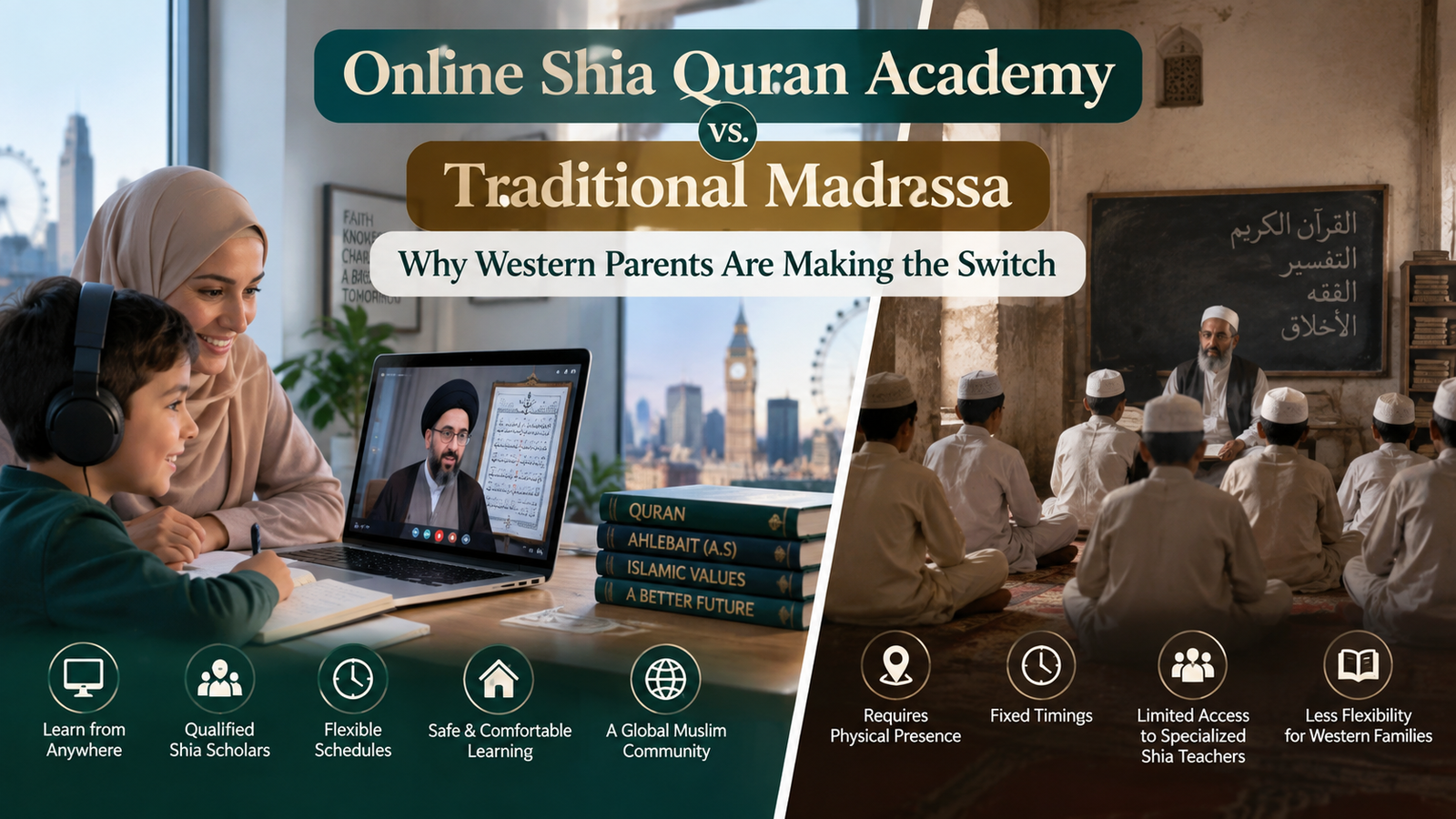
For decades, sending a child to the local madrassa on weekends was simply what Muslim families did. It was the default, the only option in most cities, and nobody questioned it much. But for Shia families living in the West today, that default is being reconsidered — and increasingly, replaced. More and more parents are choosing online Shia Quran Centers over the traditional madrassa system, and once you look at what each option actually offers a child growing up in a Western environment, it’s easy to see why.
This isn’t about technology for technology’s sake. It’s about what actually works for the realities of Western Muslim family life.
The Reality of Traditional Madrassas in the West
Traditional madrassas were built around a model that made sense in Muslim-majority countries: a local center, a set curriculum, and a community of families living close enough to attend regularly. Transplant that same model into a Western city, and cracks start to show almost immediately.
Limited availability of Shia-specific institutions. In most Western cities, Shia mosques and madrassas are far fewer than Sunni ones, and in many towns there are none at all. Families sometimes drive 45 minutes to an hour each way, every single week, just to get their child an hour of instruction.
Overcrowded, one-size-fits-all classes. Many madrassas operate with one teacher managing 15 to 25 children of mixed ages and skill levels at once. A child who’s falling behind gets little individual attention, and a child who’s ahead gets bored waiting for the rest of the class to catch up.
Inconsistent teaching quality. Volunteer-run madrassas often rely on whoever is available in the community rather than teachers trained specifically in tajweed, tafsir, and child education. Good intentions don’t always translate into good teaching.
Rigid scheduling. Saturday morning or Sunday afternoon, take it or leave it. For families juggling sports practices, part-time jobs, or multiple kids with different school schedules, this rigidity often means Quran education is the first thing to get skipped when life gets busy.
A disconnect from the child’s everyday world. Many madrassa curriculums are imported wholesale from abroad, with examples and references that don’t relate to a child who has only ever lived in Toronto, London, or Houston. The content can feel foreign in a way that makes it harder for kids to connect with.
None of this means madrassa teachers don’t care — most care deeply. But the structure itself was never designed for the Western Muslim household, and it shows.
What an Online Shia Quran Academy Actually Offers
Online academies didn’t emerge as a trend; they emerged as a direct response to these exact problems.
One-on-one attention. Instead of one teacher stretched across two dozen kids, a child gets a dedicated teacher focused entirely on their pace, their mistakes, and their strengths. Progress that might take a year in a crowded classroom can often happen in a few months with focused, individualized teaching.
Access to genuinely qualified Shia teachers, regardless of location. A family in a small Western town with no local Shia community can still connect their child with a teacher trained specifically in Shia jurisprudence and tajweed. Geography stops being a barrier to quality religious education.
Flexible scheduling that fits real life. Classes can happen after school, in the evening, or on whatever day actually works — and if something comes up, sessions can usually be rescheduled rather than simply missed. This flexibility is often the single biggest reason families stick with Quran education long-term instead of quietly dropping it after a few months.
No commute, no wasted time. Learning happens from home, which means no traffic, no finding parking, and no losing an hour of a Saturday to driving. That saved time and energy makes consistency far easier to maintain.
Curriculum built with Western-raised kids in mind. The better online academies design their teaching specifically for children who are navigating two cultures at once, using language, examples, and pacing that actually resonates with how these kids think and live.
Easier progress tracking for parents. Most online platforms give parents visibility into what’s being covered, how their child is progressing, and where they might need extra support — something that’s much harder to get from a traditional classroom setting.
A safer, more comfortable learning environment for shy or anxious kids. Some children simply learn better one-on-one than in a group setting where they’re afraid to make mistakes in front of peers. Online, one-on-one classes remove that social pressure entirely.
It’s Not About Abandoning Tradition
It’s worth being clear about something: choosing an online academy isn’t a rejection of tradition or community. It’s a recognition that the traditional delivery method — not the content itself — often fails to serve Western families well. The goal is still the same as it’s always been: raising a child who can recite the Quran correctly, understand its meaning, and carry Shia identity with confidence. Online academies are simply a better-fitted tool for reaching that goal in a Western context.
For many families, the ideal approach even blends both — using an online academy for consistent, individualized Quran and tajweed instruction, while still attending the local mosque or madrassa for community events, Muharram programs, and the social side of faith that only in-person gathering can provide.
Conclusion
The traditional madrassa model wasn’t built with Western logistics, schedules, or classroom sizes in mind, and for many Shia families, that mismatch has quietly been holding their children’s religious education back for years. Online Shia Quran academies with perfect Online Shia Quran Teachers close that gap — offering qualified, faith-aligned teachers, real one-on-one attention, and a level of flexibility that fits how Western families actually live. For parents serious about giving their kids a strong, lasting connection to the Quran, it’s no longer a compromise. It’s often simply the better option.
Perfect for Muslim kids living in the West where physical Madrassa system don’t exist.